
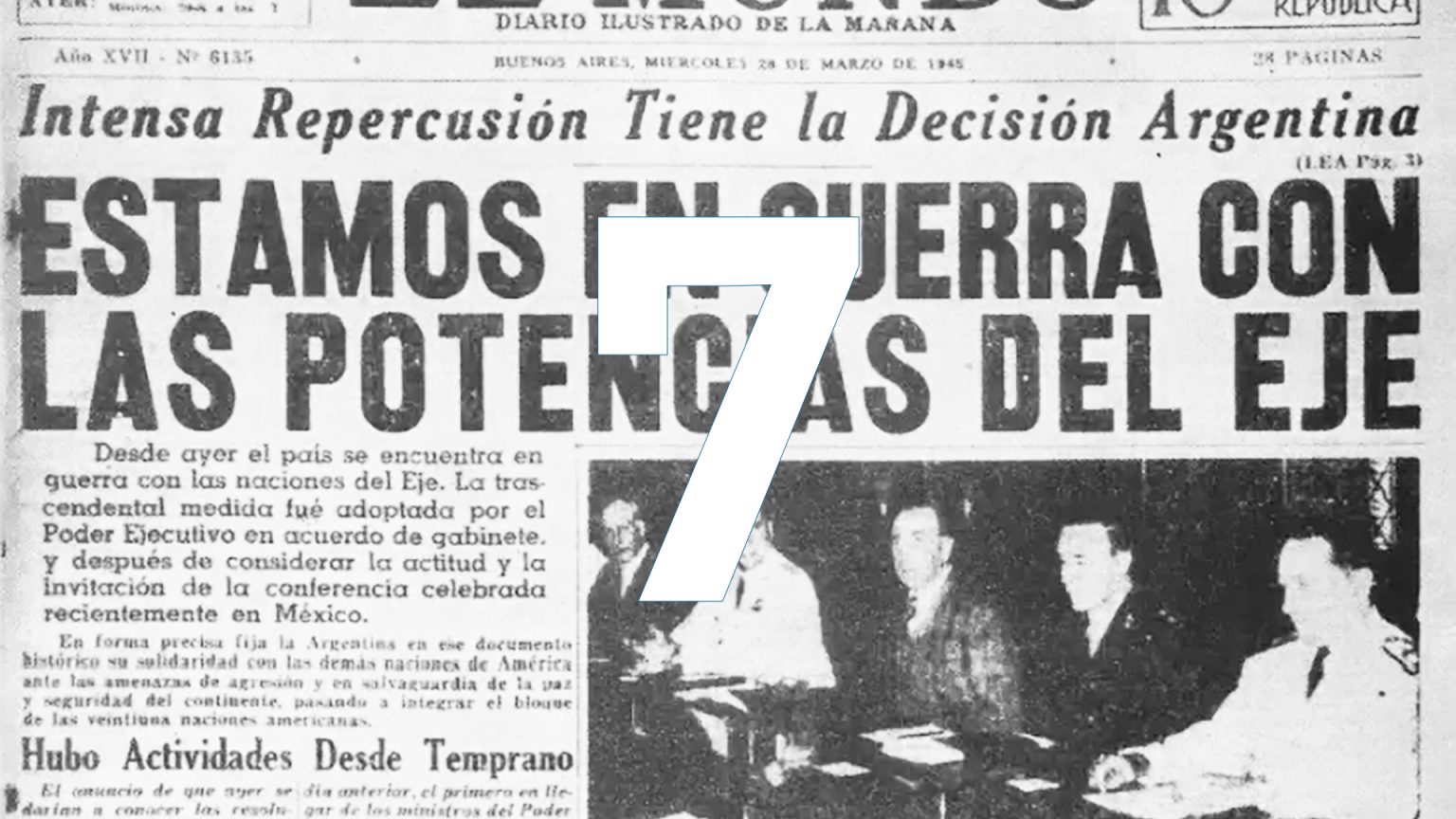
Durante la Segunda Guerra Mundial, la Argentina sostuvo inicialmente una política de neutralidad con raíces históricas, económicas y diplomáticas. Esa posición buscó preservar la soberanía nacional, evitar la participación directa en un conflicto europeo y proteger intereses comerciales estratégicos.
Sin embargo, el canciller argentino José María Cantilo en abril de 1940 propuso la “no beligerancia”, una salida intermedia en la cual la Argentina dejaría la neutralidad estricta, reconocería políticamente que no era indiferente ante la guerra europea y se acercaría al bando aliado sin declarar formalmente la guerra. La idea fracasó porque chocaba con el marco jurídico y diplomático interamericano, con la cautela de Estados Unidos —que todavía era neutral—, con el temor de varios países latinoamericanos a verse arrastrados al conflicto y con divisiones internas argentinas.
El ataque japonés a Pearl Harbor, el 7 de diciembre de 1941, marcó un punto de quiebre en la guerra y en la política continental. La entrada de Estados Unidos en el conflicto intensificó las presiones diplomáticas sobre los países de América Latina para que rompieran relaciones con las potencias del Eje.
En ese contexto, en 1942 se realizó la Conferencia de Río de Janeiro. Allí, la mayoría de los países americanos acordó interrumpir sus vínculos diplomáticos con el Eje. La mayoría de los países americanos abandonó gradualmente la neutralidad inicial y terminó entrando en guerra contra el Eje, especialmente después del ataque japonés a Pearl Harbor en diciembre de 1941. Brasil declaró la guerra a la Alemania nazi en 1942; Bolivia y Colombia, en 1943; y la mayor parte del resto de Sudamérica, en 1945. Chile fue el único país sudamericano que no llegó a declarar la guerra a la Alemania nazi. La Argentina mantuvo su neutralidad hasta 1944 y en 1945 declaró la guerra. Esa decisión generó un fuerte aislamiento regional y un creciente enfrentamiento diplomático con Estados Unidos. Bajo ese contexto, el país conservó estrechos vínculos comerciales con los aliados, especialmente con Gran Bretaña.
En 1943, el gobierno de Ramón Castillo sufrió un golpe de Estado encabezado por un sector de las Fuerzas Armadas, liderado por el GOU, el Grupo de Oficiales Unidos. Sus integrantes defendieron la continuidad de la neutralidad. Sin embargo, el nuevo gobierno enfrentó presiones internacionales y un mayor aislamiento diplomático. Los cambios en la coyuntura mundial impulsaron finalmente un giro en la política exterior argentina.
En enero de 1944, la Argentina rompió relaciones diplomáticas con las potencias del Eje. En marzo de 1945, declaró formalmente la guerra a Alemania y Japón; Italia se rindió antes de esa decisión. La declaración de guerra puso fin a un prolongado período de neutralidad y permitió la incorporación plena del país al sistema internacional de posguerra. Sin embargo, el debate sobre el significado, los costos y las consecuencias de esa neutralidad continúa ocupando un lugar central en el debate historiográfico y la memoria política de la Argentina.

 Lanzamos nuestro canal de WhatsApp
Sumate al nuevo canal oficial del Museo del Holocausto de Buenos Aires y recibí en tu celular las últimas novedades, actividades, presentaciones y propuestas educativas.
Lanzamos nuestro canal de WhatsApp
Sumate al nuevo canal oficial del Museo del Holocausto de Buenos Aires y recibí en tu celular las últimas novedades, actividades, presentaciones y propuestas educativas.