
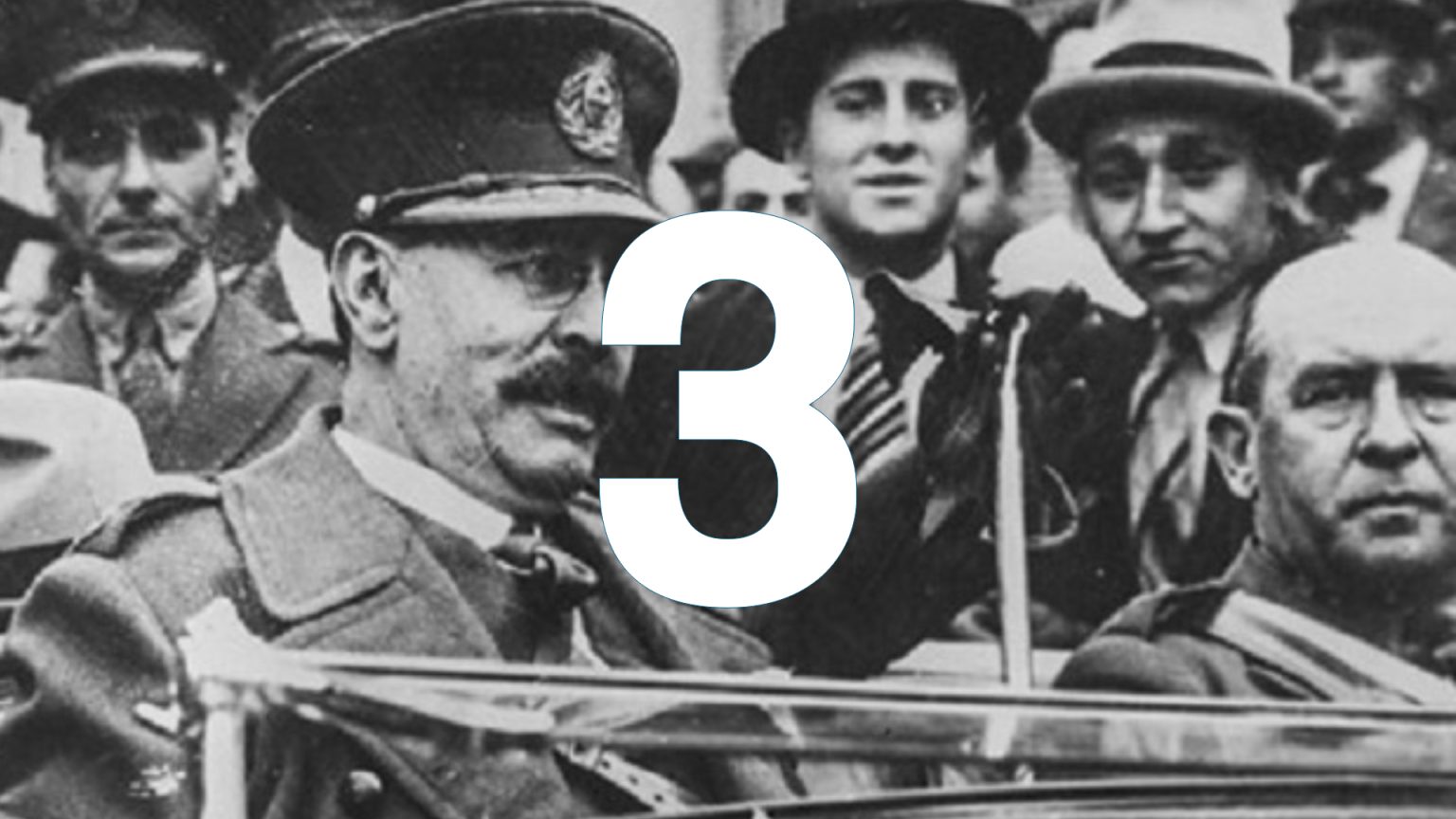
El golpe de Estado de 1930 contra el gobierno de Hipólito Yrigoyen interrumpió el orden democrático en la Argentina. El nuevo gobierno dictatorial de José Félix Uriburu intentó imponer una salida autoritaria inspirada en modelos fascistas. Sin embargo, ese proyecto fracasó rápidamente, porque no logró construir consensos amplios ni estabilizar el sistema político. Ese fracaso abrió paso a los gobiernos de la Concordancia, una alianza política heterogénea que reunió a sectores conservadores, radicales antipersonalistas y socialistas independientes.
La Concordancia se mantuvo en el poder durante el resto de la década mediante el fraude electoral, la proscripción y el control político. Aun así, sus gobiernos contribuyeron a limitar la emergencia de alternativas autoritarias más radicales, semejantes a las que se consolidaron en la Europa de entreguerras. La Argentina de los años treinta combinó así una democracia restringida con tensiones ideológicas profundas, en un contexto internacional marcado por el ascenso del fascismo, el nazismo y otros movimientos nacionalistas autoritarios.
Frente al avance del nazismo en Europa y a la circulación local de discursos racistas y antisemitas, distintos sectores de la sociedad civil argentina organizaron respuestas democráticas. En ese marco, un mes después de la Conferencia de Évian se realizó en Buenos Aires el Primer Congreso contra el Racismo y el Antisemitismo, una iniciativa pionera en América Latina. El Congreso reunió a intelectuales, dirigentes políticos, sindicalistas, representantes de diversas colectividades y exiliados europeos que habían huído del nazismo y del fascismo.
Entre las figuras más reconocidas que adhirieron o participaron se encontraron dirigentes políticos y referentes de la cultura como Arturo Frondizi, Alicia Moreau de Justo y Jorge Luis Borges. Las resoluciones del Congreso condenaron explícitamente las doctrinas raciales del nazismo y del fascismo, defendieron la igualdad de derechos y promovieron la convivencia plural. También afirmaron una tradición democrática argentina que, aunque atravesada por el fraude y las exclusiones políticas, ofreció espacios de denuncia, solidaridad y resistencia frente al antisemitismo europeo y sus expresiones locales.

 Lanzamos nuestro canal de WhatsApp
Sumate al nuevo canal oficial del Museo del Holocausto de Buenos Aires y recibí en tu celular las últimas novedades, actividades, presentaciones y propuestas educativas.
Lanzamos nuestro canal de WhatsApp
Sumate al nuevo canal oficial del Museo del Holocausto de Buenos Aires y recibí en tu celular las últimas novedades, actividades, presentaciones y propuestas educativas.