
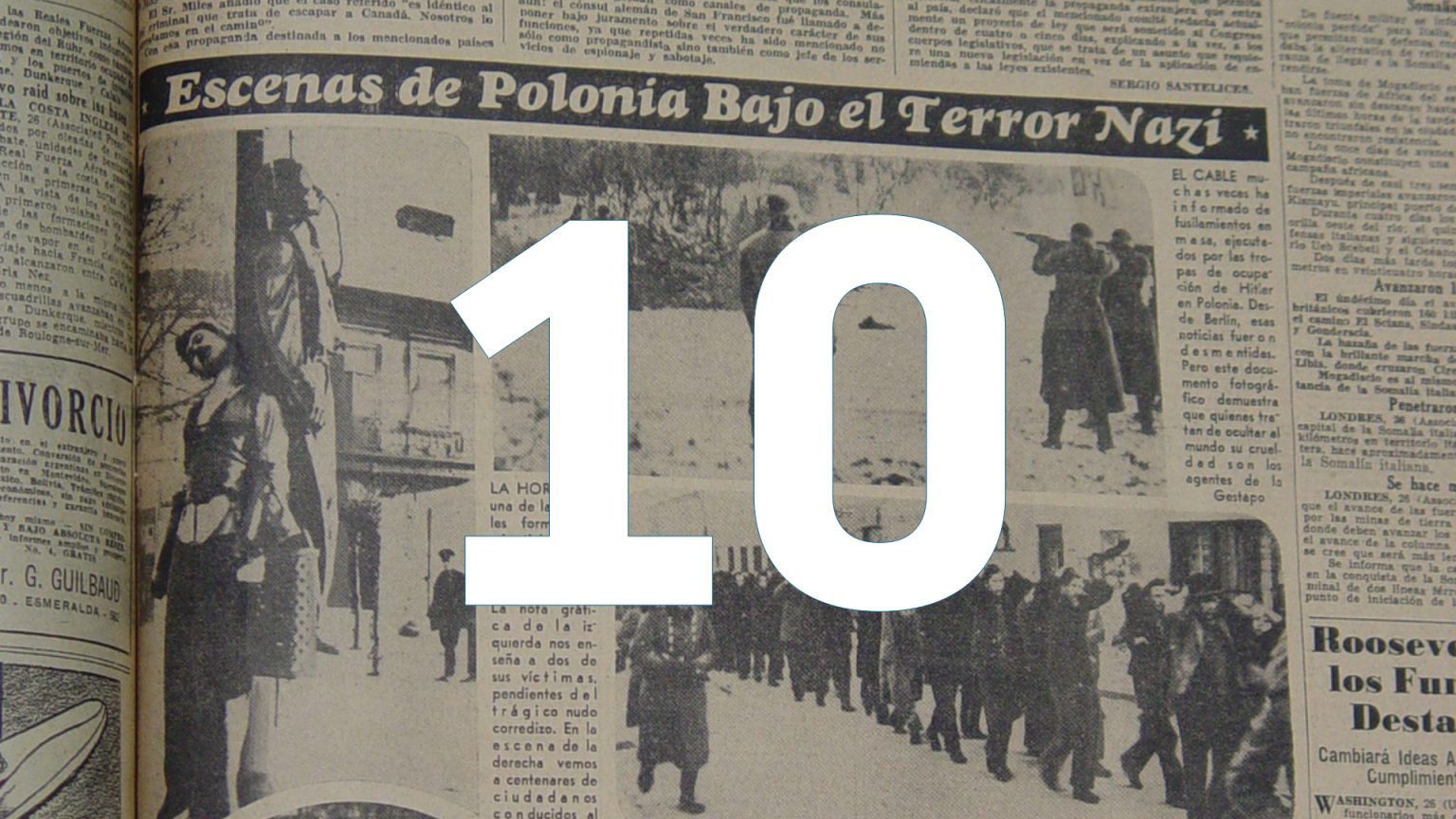
Entre 1933 y 1945, los diarios argentinos informaron sobre el ascenso, la consolidación y la caída del régimen nazi. A través de noticias internacionales, editoriales y notas de opinión, la prensa gráfica registró, con distinta intensidad y distintos enfoques, la evolución de un proceso político que derivó en persecuciones sistemáticas, violencia estatal y, finalmente, en el exterminio de millones de personas.
Desde los primeros años del régimen, los medios gráficos ofrecieron a sus lectores información concreta sobre la persecución que se desarrolló en Alemania. Esa cobertura acompañó la evolución de la Segunda Guerra Mundial y del Holocausto, y recurrió a fuentes diversas: declaraciones de dirigentes nazis, medios alemanes, grupos opositores al nazismo, instituciones judías y agencias o periódicos de los países aliados.
La Nación, La Prensa, Crítica, La Voz del Interior, de Córdoba, y Los Andes, de Mendoza, fueron algunos de los periódicos que otorgaron desde el comienzo una cobertura sostenida a las persecuciones nazis. Entre 1933 y 1939, las líneas editoriales mostraron posiciones diversas, con apoyos explícitos, cautelas diplomáticas y oposiciones abiertas. En la década de 1940, en cambio, se consolidó un rechazo más generalizado al nazismo y a sus políticas genocidas. Crítica se destacó por su posición abiertamente antinazi, al punto de que el gobierno alemán exigió al gobierno argentino su censura.
Sin embargo, la disponibilidad de información no implicó una comprensión plena, homogénea y masiva del proceso genocida. El conocimiento sobre lo que ocurrió en Europa resultó desigual y fragmentario. Las noticias aparecieron dispersas en el tiempo, con énfasis cambiantes, y no siempre ocuparon el lugar que la gravedad de los hechos exigía.
Además, comprender el exterminio requirió articular muchas piezas: persecuciones legales, guetos, deportaciones, fusilamientos, campos de exterminio y desaparición de comunidades enteras. A ello se sumó que los diarios no publicaron todos del mismo modo. Las diferencias de tono, jerarquización y marco interpretativo influyeron directamente en la recepción de las noticias por parte de la opinión pública argentina.
En síntesis, existió información suficiente para advertir la violencia extrema y el rumbo criminal del régimen nazi. Sin embargo, esa información no garantizó que toda la sociedad argentina comprendiera, en tiempo real, la dimensión total, sistemática e inédita del exterminio.

 Lanzamos nuestro canal de WhatsApp
Sumate al nuevo canal oficial del Museo del Holocausto de Buenos Aires y recibí en tu celular las últimas novedades, actividades, presentaciones y propuestas educativas.
Lanzamos nuestro canal de WhatsApp
Sumate al nuevo canal oficial del Museo del Holocausto de Buenos Aires y recibí en tu celular las últimas novedades, actividades, presentaciones y propuestas educativas.