
Antes de ocupar el espacio público, el recuerdo del Holocausto se sostuvo en gestos colectivos, en rituales de duelo y en la palabra de quienes sobrevivieron. Monumentos, actos comunitarios y testimonios dieron forma a una memoria que buscó honrar a las víctimas, transmitir la experiencia vivida y mantener viva la advertencia frente al odio y la violencia.
Los primeros actos comunitarios de recordación
Antes de la existencia de monumentos, la memoria del Holocausto se expresó a través de actos comunitarios organizados por instituciones como la DAIA. Jornadas de duelo, cierre de comercios, ceremonias religiosas y grandes actos en espacios como el Luna Park permitieron visibilizar el dolor colectivo y denunciar los crímenes nazis. Estos actos combinaron rituales judíos con discursos públicos y constituyeron las primeras formas organizadas de memoria en Argentina.
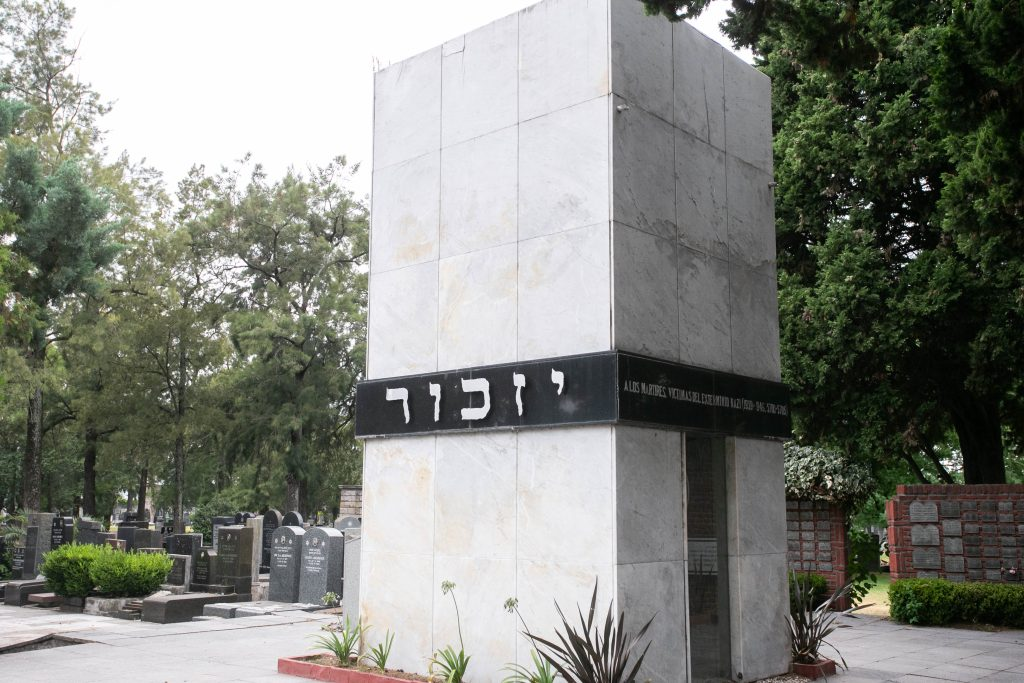
El monumento en el Cementerio Israelita de La Tablada
El primer monumento dedicado a las víctimas del Holocausto en Argentina fue erigido por la AMIA en el Cementerio Israelita de La Tablada e inaugurado en 1947. Conocido como el monumento al Mártir Desconocido, ofreció un lugar concreto para el duelo de quienes habían perdido a sus familiares en Europa y no contaban con tumbas donde recordarlos. Fue una marca material temprana de la memoria, profundamente ligada a la liturgia judía y pensada principalmente para la comunidad, en un contexto en el que el Estado aún no asumía un rol activo en la conmemoración.
La formación de Sherit Hapleitá
En este proceso fue fundamental la creación de Sherit Hapleitá, la asociación de sobrevivientes del nazismo en Argentina. Fundada en los años sesenta, permitió a los sobrevivientes organizarse, apoyarse mutuamente y reconocerse públicamente como tales. Desde allí impulsaron actos conmemorativos y, más tarde, la transmisión activa de sus memorias.
El rol de los testimonios de los sobrevivientes
Durante muchos años, los sobrevivientes del Holocausto ocuparon un lugar marginal en la memoria pública y sus relatos circularon principalmente en ámbitos privados o comunitarios. A partir de los años sesenta y más claramente desde la transición democrática, el testimonio adquirió centralidad como forma de transmisión histórica, ética y pedagógica. Durante la década de 1990, los testimonios adquirieron una visibilidad sin precedentes. El estreno de la película La lista de Schindler (1993) tuvo un impacto fundamental al reforzar el interés por escuchar las voces de los sobrevivientes. A partir de ese impulso, Steven Spielberg creó la USC Shoah Foundation, destinada a registrar y preservar testimonios en todo el mundo. En este marco, numerosos sobrevivientes que residían en Argentina brindaron su testimonio audiovisual, consolidando al testimonio como herramienta histórica y pedagógica que mantiene la memoria del Holocausto más allá de la desaparición física de los testigos.
Los sitios de recordación del Holocausto en Argentina
Con el paso del tiempo, la memoria del Holocausto se plasmó en diversos sitios de recordación en todo el país. Museos, monumentos y centros educativos —como el Museo del Holocausto de Buenos Aires, el Monumento Nacional a las Víctimas del Holocausto y otros memoriales provinciales— consolidaron esta memoria en el espacio público. Estos lugares simbolizan la transformación de una memoria inicialmente comunitaria en una memoria cívica, abierta a toda la sociedad argentina.

 Lanzamos nuestro canal de WhatsApp
Sumate al nuevo canal oficial del Museo del Holocausto de Buenos Aires y recibí en tu celular las últimas novedades, actividades, presentaciones y propuestas educativas.
Lanzamos nuestro canal de WhatsApp
Sumate al nuevo canal oficial del Museo del Holocausto de Buenos Aires y recibí en tu celular las últimas novedades, actividades, presentaciones y propuestas educativas.