
Las medidas antisemitas adoptadas por la Alemania nazi buscaron forzar la salida de los judíos del país. Durante los primeros años, una minoría optó por emigrar hacia países vecinos, mientras otros eligieron destinos más lejanos.
Hacia 1938, la crisis migratoria se aceleró. Frente a esta situación, el presidente estadounidense Franklin D. Roosevelt convocó a la Conferencia de Évian, celebrada en julio de ese año. El encuentro reunió a representantes de 32 países, entre ellos la Argentina. Sin embargo, la conferencia finalizó sin acuerdos concretos ni compromisos colectivos para recibir refugiados, por lo que fue interpretada como un fracaso diplomático y moral ante la emergencia humanitaria.
La Argentina participó a través del delegado Tomás Le Breton, pero, al igual que la mayoría de los países presentes, evitó asumir compromisos específicos para ampliar el ingreso de refugiados judíos. Si bien expresó su disposición a recibir inmigrantes “agrícolas o artesanos”, mantuvo las restricciones consulares vigentes y no modificó sustancialmente su política migratoria.
El caso de República Dominicana fue la única excepción parcial de Évian: ofreció recibir hasta 100.000 refugiados judíos, buscando también mejorar su imagen internacional. Sin embargo, el proyecto tuvo un alcance muy limitado ya que, aunque se otorgaron miles de visas, solo unos pocos cientos llegaron a establecerse en Sosúa.
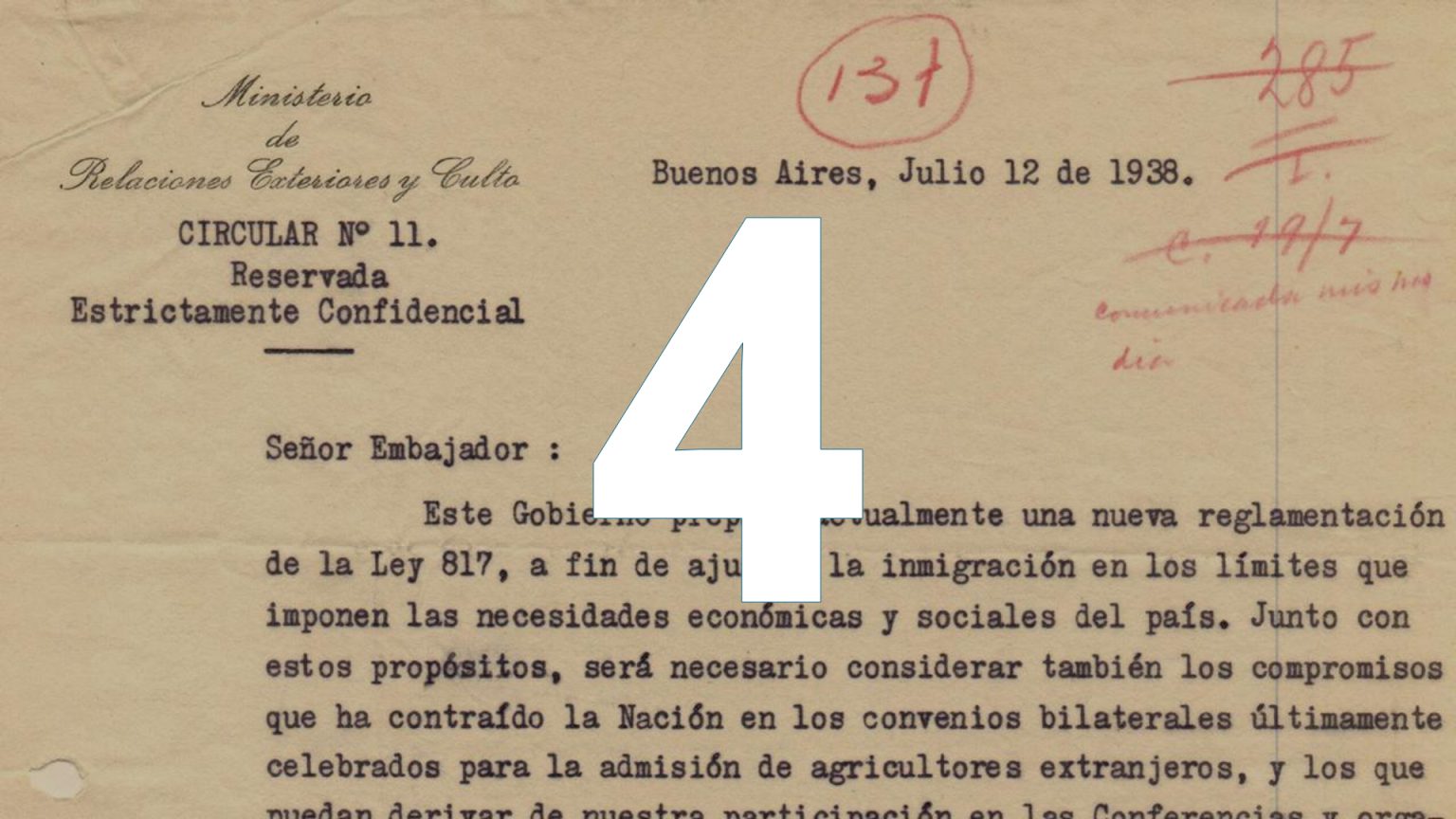
A lo largo de los años treinta, la Argentina endureció sus criterios de admisión de inmigrantes en un contexto atravesado por los efectos de la crisis económica mundial. El ejemplo más emblemático fue la Circular 11, emitida en la misma semana de la Conferencia de Évian por la Dirección General de Migraciones del Ministerio de Relaciones Exteriores y Culto.
Este documento instruyó de forma secreta a los consulados argentinos en Europa a negar o dificultar el otorgamiento de visas a personas consideradas “indeseables” o expulsadas de sus países de origen. Aunque judíos europeos continuaron ingresando a la Argentina por vías legales e ilegales, no se pudo establecer cuántos potenciales refugiados quedaron sin posibilidad de obtener asilo debido a esta medida.
Después de la guerra, la Circular 11 no influyó de manera decisiva en la política migratoria argentina. Sin embargo, su permanencia formal reveló la persistencia de una normativa discriminatoria. Recién en 2005, el Estado argentino la derogó oficialmente.

 Lanzamos nuestro canal de WhatsApp
Sumate al nuevo canal oficial del Museo del Holocausto de Buenos Aires y recibí en tu celular las últimas novedades, actividades, presentaciones y propuestas educativas.
Lanzamos nuestro canal de WhatsApp
Sumate al nuevo canal oficial del Museo del Holocausto de Buenos Aires y recibí en tu celular las últimas novedades, actividades, presentaciones y propuestas educativas.