
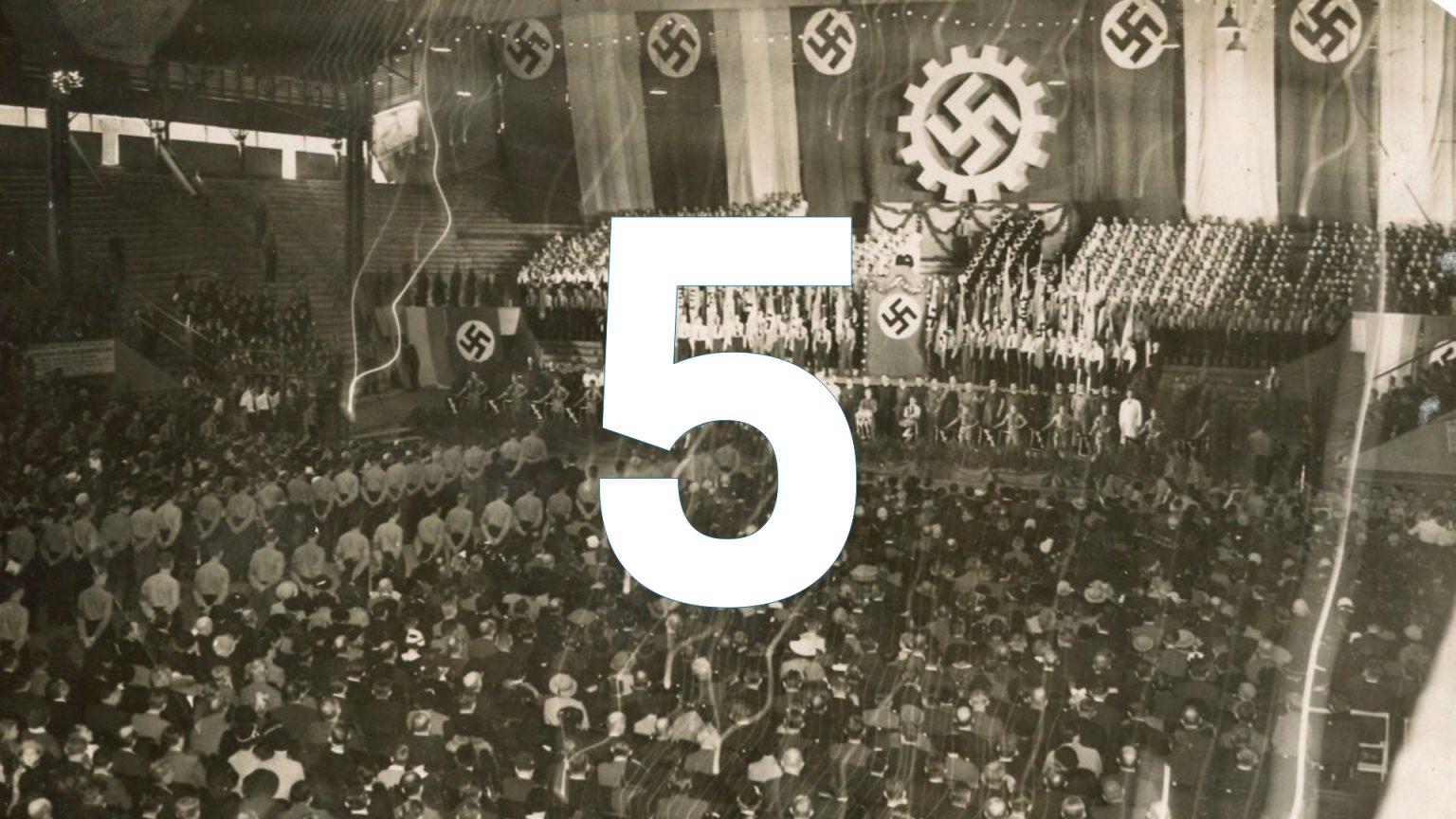
Durante la década de 1930, el Partido Nacionalsocialista Alemán se organizó formalmente en la Argentina como parte de su estructura en el exterior. Su objetivo fue mantener y reforzar la adhesión ideológica al nazismo entre los alemanes residentes en el país, así como proyectar la influencia política y cultural del Tercer Reich fuera de Europa.
La organización contó con una conducción local vinculada a la embajada alemana y desarrolló una red de agrupaciones políticas, culturales, educativas y recreativas. Estas instituciones buscaron influir ideológicamente sobre la colectividad germanoparlante, promover la identificación con el régimen nazi y fortalecer los lazos con Alemania.
La expresión más visible y masiva de esta presencia fueron los actos realizados en el Luna Park, especialmente el del 10 de abril de 1938, organizado en apoyo al Anschluss, la anexión de Austria al Tercer Reich. Ese encuentro constituyó el mayor acto nazi realizado en la Argentina y reunió a aproximadamente 15.000 asistentes de la comunidad alemana. Su magnitud, su carácter público y su fuerte carga simbólica intensificaron las alertas sobre las actividades del partido nazi. Poco tiempo después, el Estado argentino disolvió la organización por decreto.
Sin embargo, la comunidad alemana en la Argentina no actuó de manera homogénea frente al ascenso del nazismo. Un sector expresó desacuerdos, reservas o un enfrentamiento abierto con la ideología nazi. Esa oposición se manifestó con fuerza en el ámbito educativo, en la prensa y en la vida cultural. La creación del colegio Pestalozzi y la línea editorial del diario Argentinisches Tageblatt fueron ejemplos destacados de esa resistencia antinazi.
También fuera de la comunidad alemana, distintos sectores de la sociedad argentina manifestaron su rechazo al nazismo. Una de las expresiones más visibles fue la movilización realizada en repudio a la celebración del Anschluss, convocada por la Federación Universitaria Argentina. Asimismo puede mencionarse al diario Crítica como un ejemplo de oposición al nazismo fuera de la comunidad alemana. El periódico denunció tempranamente la violencia del régimen hitlerista, criticó sus políticas represivas y contribuyó a instalar en la opinión pública argentina una mirada de rechazo frente al nazismo.
Esta situación mostró que la comunidad alemana en la Argentina constituyó un espacio de disputa política e ideológica. Lejos de formar un bloque uniforme, estuvo atravesada por conflictos internos frente al avance del nazismo en Europa y frente a sus intentos de proyectarse en la vida pública argentina.

 Lanzamos nuestro canal de WhatsApp
Sumate al nuevo canal oficial del Museo del Holocausto de Buenos Aires y recibí en tu celular las últimas novedades, actividades, presentaciones y propuestas educativas.
Lanzamos nuestro canal de WhatsApp
Sumate al nuevo canal oficial del Museo del Holocausto de Buenos Aires y recibí en tu celular las últimas novedades, actividades, presentaciones y propuestas educativas.