
La preocupación estatal por las “actividades antiargentinas” se intensificó desde mediados de los años treinta, cuando confluyeron la radicalización del nazismo en Europa, las denuncias de sectores antifascistas locales —argentinos y germanoparlantes— y la creciente visibilidad de organizaciones alemanas alineadas con el Tercer Reich.
A ese escenario se sumó la circulación de diarios, revistas y libros nacionalistas, como Clarinada, que difundieron un antisemitismo asociado con el anticomunismo, el antimasonismo y la idea de una supuesta conspiración mundial judía. Estas publicaciones no alcanzaron una llegada masiva al público general, pero tampoco ocuparon un lugar marginal. Sus tiradas fueron menores que las de la gran prensa; aún así, lograron influir en redes nacionalistas, militantes y católicas, con circulación tanto en Buenos Aires como en el interior del país.
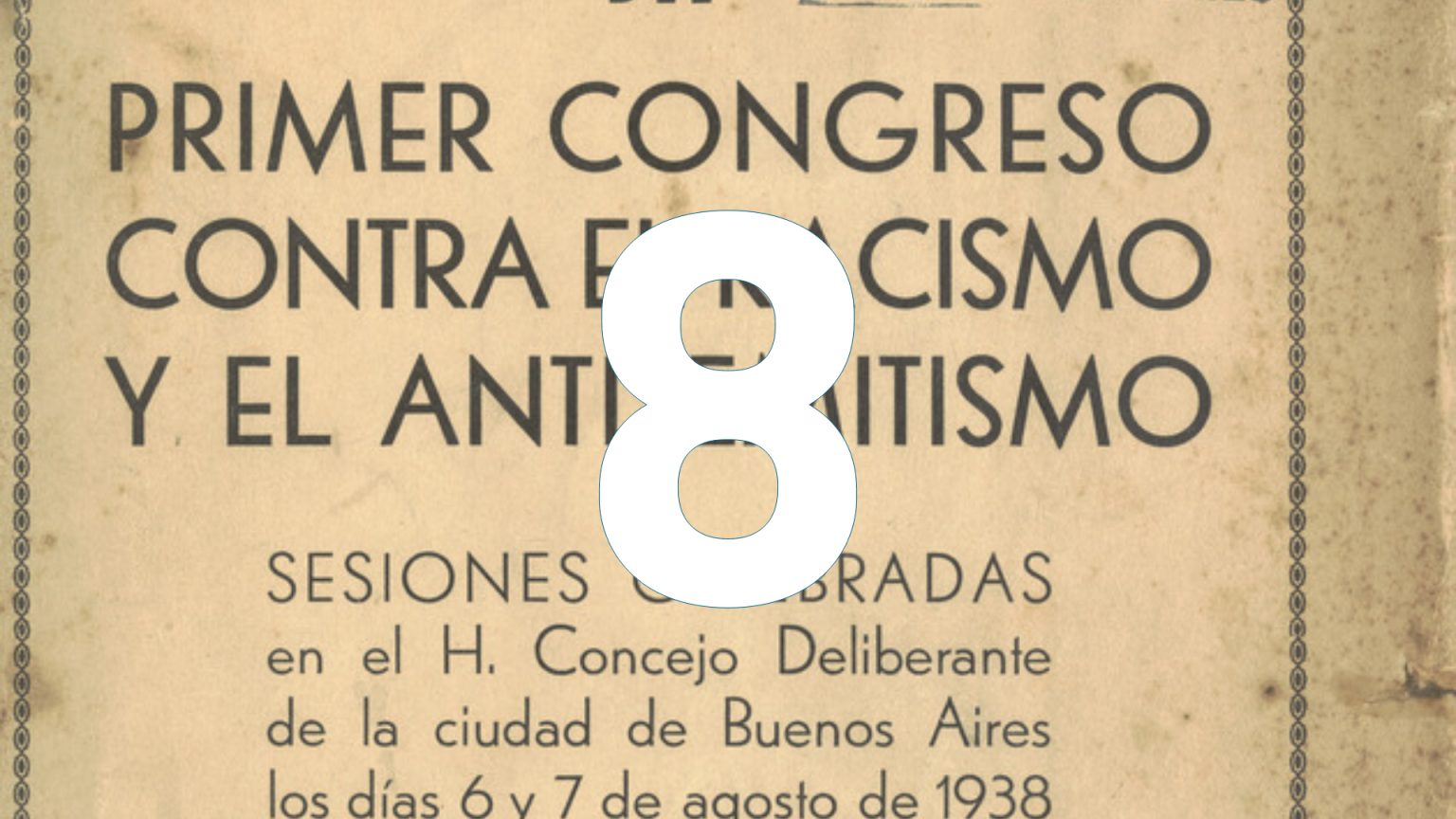
Fuera del ámbito estatal, distintos sectores de la sociedad argentina impulsaron iniciativas contra la influencia nazi. Una de las más importantes fue el Congreso contra el Racismo y el Antisemitismo, realizado en agosto de 1938 en el Concejo Deliberante de Buenos Aires. El encuentro reunió a destacadas figuras políticas e intelectuales de la época, entre ellas Lisandro de la Torre, Arturo Frondizi, Arturo Illia, Ricardo Balbín, Alicia Moreau de Justo y Jorge Luis Borges.
Durante los dos días que duró el Congreso, los asistentes debatieron sobre el avance del fascismo, el racismo y el antisemitismo. Sus intervenciones expresaron preocupación por la situación europea y también por la circulación local de discursos autoritarios y antijudíos. El encuentro permitió articular voces democráticas diversas y manifestó un compromiso público frente a esas amenazas.
En 1939, el Poder Ejecutivo dispuso la ilegalización del Partido Nacionalsocialista Alemán en territorio argentino. La decisión se apoyó en el principio de que ninguna organización política extranjera podía actuar dentro del país. La medida no implicó una persecución masiva contra la comunidad alemana, sino que apuntó a desarticular las estructuras políticas dependientes del Tercer Reich.
La intervención estatal se profundizó con la creación de la Comisión Investigadora de Actividades Antiargentinas en el ámbito de la Cámara de Diputados. Su objetivo fue investigar organizaciones extranjeras que actuaron en perjuicio de la soberanía nacional. Los informes, actuaciones y pruebas reunidas por la Comisión se concentraron principalmente en las redes nazis.
Sus principales hallazgos se presentaron en el Informe N.º 5, publicado en 1941. Allí, la Comisión documentó la infiltración de la ideología nazi en empresas, escuelas y asociaciones recreativas alemanas. También señaló la persistencia de prácticas raciales, disciplinarias y políticas incompatibles con la legislación argentina.
Tras la ruptura de relaciones diplomáticas con el Eje en 1944 y la declaración de guerra en 1945, el Estado argentino profundizó su política de control sobre la comunidad alemana residente en el país y sobre las instituciones vinculadas al nazismo.

 Lanzamos nuestro canal de WhatsApp
Sumate al nuevo canal oficial del Museo del Holocausto de Buenos Aires y recibí en tu celular las últimas novedades, actividades, presentaciones y propuestas educativas.
Lanzamos nuestro canal de WhatsApp
Sumate al nuevo canal oficial del Museo del Holocausto de Buenos Aires y recibí en tu celular las últimas novedades, actividades, presentaciones y propuestas educativas.